
WELCOME BONUS 300%
UP TO €2000 + 100
FREE SPINS
UP TO €2000 + 100
FREE SPINS
Home → Games
Casino games at Palace Of Chance Casino
Split 17:1 and Corner 8:1 in Payout Comparison
The payout ratio for a Split bet in French Roulette stands at 17:1, which is mathematically lower than the Straight bet's 35:1 payout. This discrepancy reflects the higher probability of winning when covering two adjacent numbers instead of just one single number on the wheel. Players betting on splits face a house edge of 2.70%, identical to other inside bets in this variant without La Partage rules. The lower multiplier reduces potential returns significantly compared to single-number wagers.
A Corner bet pays out at 8:1, covering four numbers arranged in a square on the layout. This payout structure offers a much smaller return relative to the stake compared to the Split bet's 17:1 ratio. Despite the lower multiplier, the probability of hitting four specific numbers remains lower than hitting two, balancing the risk profile. The house edge remains constant at 2.70% across both bet types in this European wheel configuration.
Comparing these payouts reveals that the Corner bet at 8:1 provides less reward per unit wagered than the Split bet at 17:1. Both bets contribute only 10% toward the bonus wagering requirement, making them inefficient for clearing the 300% welcome bonus up to €2,000. Players seeking to convert bonus funds should prioritize slots contributing 100%, as table games like these roulette bets offer poor conversion efficiency. The mathematical expectation favors avoiding high-variance table bets during bonus play.
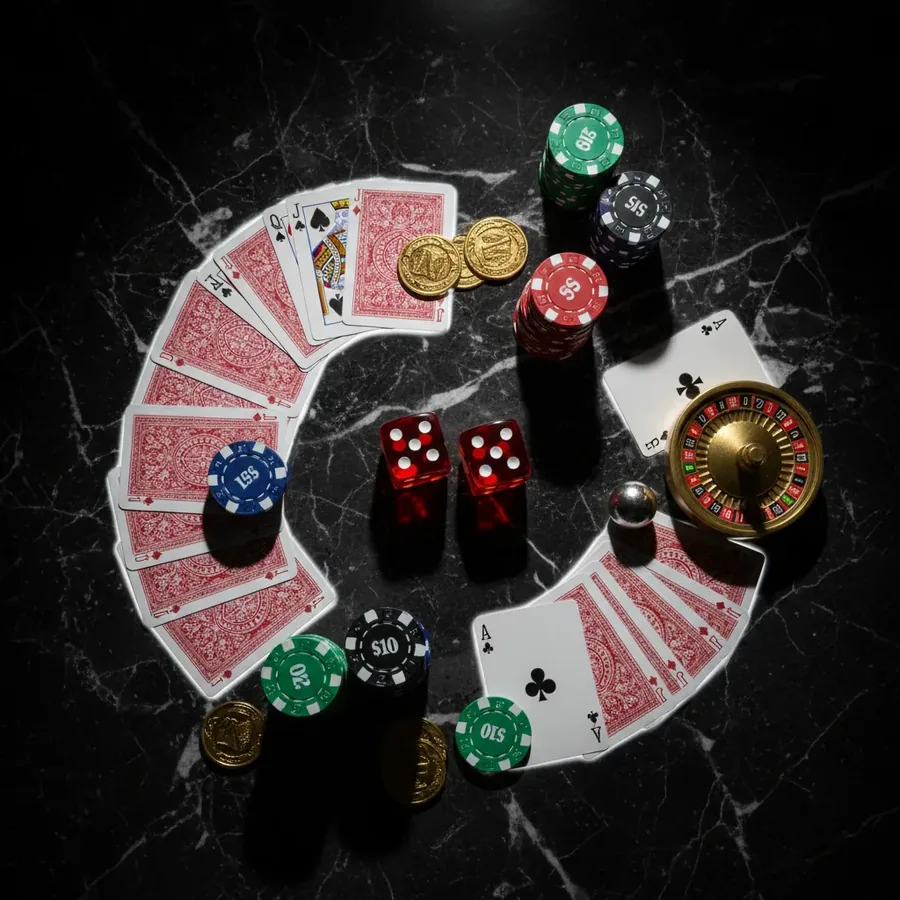
Sic Bo Pays from 1:1 to 180:1
Specific Triple bets in Sic Bo offer the highest payout at 180:1, rewarding players who correctly predict all three dice showing the same exact number. This massive multiplier comes with a steep house edge of 16.20%, significantly higher than other special wares in the game. The low probability of hitting a specific triple justifies the high payout but makes it a high-risk strategy for bonus clearance. Such volatile bets are unsuitable for converting the €2,000 welcome bonus efficiently.
Single Number bets provide a tiered payout structure ranging from 1:1 to 3:1, depending on how many dice match the selected number. These bets carry the lowest house edge among special wares at 7.87%, making them statistically safer than triples or doubles. The variable payout adjusts based on the frequency of matching dice, offering better value for consistent bankroll management. Players can use these lower-edge bets to minimize losses while meeting the wagering requirements.
Any Triple bets pay 30:1 if any three identical numbers appear, carrying a house edge of 13.89%. This option sits between the high-risk Specific Triple and the safer Single Number bets in terms of expected value. The payout ratio of 30:1 is substantially lower than the 180:1 offered for specific triples but more accessible. Given the 10% contribution rate to bonus turnover, even these relatively favorable bets remain inefficient for clearing the bonus funds quickly.
Variance at the Table: 1:1 vs. 35:1
Roulette Inside Bets such as Dozen and Column wagers pay 2:1, offering moderate variance compared to the extreme volatility of Straight bets. These bets cover twelve numbers each, providing a higher hit frequency than single-number wagers while maintaining the standard 2.70% house edge. The 2:1 payout reduces the impact of losing streaks, allowing for longer play sessions under bonus conditions. However, the 10% contribution to wagering still makes them suboptimal for clearing the €2,000 bonus efficiently.
Straight bets in French Roulette pay 35:1, representing the highest variance available on the table due to the low probability of hitting a single number. This extreme payout structure creates significant bankroll fluctuations, requiring a larger initial stake to withstand potential downswings. The house edge remains fixed at 2.70%, but the risk of rapid loss increases dramatically with high-variance wagers. Such bets are ill-suited for players aiming to meet the 40x wagering requirement on the welcome bonus.
The contrast between 1:1 payouts in Blackjack and 35:1 in Roulette highlights the spectrum of table game variance. Blackjack wins typically pay 1:1, resulting in lower volatility and more predictable bankroll erosion compared to roulette's extreme swings. While blackjack offers a superior house edge of 0.15% to 0.46%, the low payout multiplier means slower bonus progression. Players must balance the desire for high payouts against the necessity of steady wagering to unlock withdrawal eligibility.
Video Poker 9/6: What the Two Numbers Mean
The 9/6 designation in Jacks or Better Video Poker refers to a Full House paying 9 coins and a Flush paying 6 coins. This specific paytable yields an RTP of 97.29%, with a house edge of 2.71% when playing optimal strategy. Deviating to an 8/5 table reduces the RTP to 94.99%, increasing the house edge by over two percentage points. The difference in payout structure directly impacts long-term profitability and bonus conversion efficiency.
Full Pay Deuces Wild Video Poker boasts an exceptional RTP of 100.76%, giving players a theoretical advantage of 0.76% over the house. This positive expectation requires flawless execution of the optimal strategy, where any deviation drops the RTP below 100%. Natural Royals pay 800 coins, while Four Deuces pay 200, reflecting the rarity and value of these hands. Such high-RTP games are rare and highly sought after by skilled players utilizing bonus funds.
NSUD Deuces Wild offers a slightly reduced RTP of 99.73% compared to the Full Pay version's 100.76%, with Five of a Kind paying 16 coins instead of 15. This minor adjustment increases the house edge to 0.27%, making it less favorable than the full pay variant. The Wild Royal still pays 25 coins, maintaining some attractiveness for players seeking high returns. Despite the slight reduction, it remains one of the few games offering near-break-even expectations under ideal conditions.
Straight, Split, and Corner: Three Terms Briefly Explained
A Straight bet covers a single number on the roulette layout, paying 35:1 with a house edge of 2.70% in French Roulette. This high-variance wager offers the maximum payout but carries the lowest probability of success among inside bets. The 35:1 multiplier compensates for the 1-in-37 chance of winning on a European wheel. Players using this bet during bonus play must account for the 10% contribution rate toward wagering requirements.
A Split bet wagers on two adjacent numbers, sharing the boundary line between them on the table layout. This bet pays 17:1, offering double the coverage of a Straight bet but halving the potential payout. The house edge remains unchanged at 2.70%, but the increased hit frequency reduces overall variance. Split bets provide a middle ground for players seeking balanced risk-reward ratios while navigating bonus terms.
A Corner bet places chips on the intersection of four numbers, covering a square block on the roulette grid. This wager pays 8:1, providing four times the coverage of a Straight bet but significantly lower returns. The house edge stays constant at 2.70%, ensuring consistent mathematical expectations across all inside bets. Corner bets offer higher win probabilities than singles, making them suitable for gradual bonus clearance despite the low payout multiplier.
Game categories at a glance
| Category | Examples | Stakes From | Highlight |
|---|---|---|---|
| Slots | Sun of Fortune, Temple Tumble Megaways, Sweet Bonanza | 0,10 EUR | thousands of titles |
| Table games | Roulette, Blackjack, Baccarat | 0,50 EUR | classic rules |
| Live casino | Auto Roulette Classic 1 Live, Infinite Blackjack | 0,20 EUR | real dealers |
| Jackpot games | Mega Moolah, Divine Fortune, Age of the Gods | 0,20 EUR | progressive pools |
| Instant games | Aviator, Plinko, Mines | 0,10 EUR | fast rounds |
| Video poker | Jacks or Better, Deuces Wild | 0,25 EUR | strategy based |
6 Decks vs. 8 Decks in House Edge
Blackjack 6 Decks with S17, DAS, and DOA rules offers a house edge of 0.46% and an RTP of 99.54%. This configuration provides a slightly higher house advantage compared to single-deck games which feature a 0.15% edge. Players using basic strategy must adhere strictly to these parameters to maintain the theoretical return rate.
The single-deck variant achieves a superior 0.15% house edge due to reduced deck composition affecting card distribution probabilities. Using six decks increases this disadvantage by approximately 0.31 percentage points relative to the single-deck baseline. Consequently, the six-deck game demands precise strategic execution to minimize the statistical loss over extended play sessions.
Insurance bets on six to eight decks carry a severe 7.47% house edge and 92.53% RTP, making them mathematically unsound. This side bet should be rejected unless counting cards yields a true count of plus three or higher. Relying on insurance significantly degrades overall profitability for standard strategy players.
How many sectors does the Game Show wheel have?
French Roulette utilizes a wheel containing thirty-seven distinct numbered sectors for inner betting markets. The presence of a single zero establishes a consistent house edge of 2.70% across all inner wagers. La Partage and En Prison rules do not apply to these specific bets, maintaining the standard European disadvantage.
Inner wagers such as Straight bets pay 35:1 while Split bets yield 17:1 under these standard conditions. The absence of special refund rules means every spin carries the full 2.70% mathematical disadvantage. Players wagering on Columns or Dozens face identical edge percentages despite different payout structures.
The total sector count directly influences the probability calculations for every possible outcome on the table layout. Each number holds an equal chance of hitting, ensuring the house maintains its defined statistical advantage. This structure applies uniformly regardless of the specific betting pattern chosen by the participant.
Martingale Fails After 8 Rounds at Table Limit
Sic Bo Small and Big bets operate under Atlantic City rules with a 2.78% house edge and 97.22% RTP. These wagers lose immediately upon any triplet outcome, creating a significant risk for progressive betting systems like Martingale. The flat 1:1 payout structure offers no compensation for increased exposure during losing streaks.
Specialized Sic Bo bets exhibit drastically worse mathematics, ranging from 7.87% to 18.52% house edge depending on the wager type. Specific Double bets carry an 18.52% disadvantage, while Single Number bets offer a more manageable 7.87% edge. Such high variance makes recovery strategies ineffective against the long-term mathematical reality.
Video Poker Deuces Wild Full Pay delivers a unique 100.76% RTP and negative house edge of -0.76%. This positive expected value requires flawless optimal strategy and maximum bet sizing to achieve the theoretical return. Any deviation from perfect play instantly reduces the RTP below one hundred percent, eliminating the advantage.
Game Shows: sectors, multipliers, and bet ranges
Baccarat Banker wagers on eight decks incur a 5% commission on wins, resulting in effective odds of 0.95:1. This fee generates a 1.06% house edge and 98.94% RTP, making it the statistically superior option in the game. The player position carries a slightly higher 1.24% edge with no commission applied.
Tie bets in Baccarat offer enhanced 9:1 payouts but suffer from a substantial 4.84% house edge and 95.16% RTP. Although improved from traditional versions, this figure remains significantly worse than the Banker or Player positions. The elevated commission structure ensures the house retains a strong mathematical advantage over time.
Craps Free Odds bets attached to Pass Line wagers carry absolutely zero house edge and 100% RTP. These additional wagers pay at true odds based on point numbers, providing the only fair price available. Combined with the base bet, the overall house edge drops to 0.37% under 3-4-5x limits.
Declining Insurance: The Most Common Blackjack Mistake
Insurance is a separate side bet allowed up to fifty percent of the main wager when the dealer shows an Ace. It pays 2:1 if the dealer possesses a ten-value hole card, but carries a 7.47% house edge. Basic strategy mandates rejecting this bet under all non-counting circumstances to preserve bankroll efficiency.
The underlying mathematics reveal a 92.53% RTP for insurance, indicating a severe long-term financial drain on participants. Accepting this wager regularly transforms a low-edge game into a high-cost entertainment product unnecessarily. Skilled players only consider insurance when card counting indicates a true count of plus three or above.
Single-deck blackjack variants present a slightly lower insurance edge of approximately 5.88% due to changed card distributions. However, the general rule of rejection remains valid for multi-deck games common in online environments. Deviating from this principle erodes the primary 0.46% advantage gained through correct base strategy application.
What Doesn't Count Towards Bonus Wagering on Table Games?
Table games contribute only 10 percent to the bonus turnover requirement, whereas slots count fully at 100 percent. This structural difference means that wagering on table games is significantly less efficient for clearing the bonus funds compared to playing slot machines. Players should be aware that this low contribution rate applies specifically to the casino's table game portfolio.
Roulette French offers a theoretical return of 97.30 percent with a house edge of 2.70 percent on inner bets. The absence of La Partage or En Prison rules for these specific wagers maintains the standard European advantage for the house. Consequently, players using table games to clear the bonus face a higher cost per unit wagered due to the reduced contribution percentage.
Video Poker Deuces Wild — Not So Ugly Ducks (NSUD) provides a high RTP of 99.73 percent with a minimal house edge of 0.27 percent. Despite its favorable mathematical profile, it remains subject to the same 10 percent contribution rule as other table games. This limits the effectiveness of using high-RTP video poker variants for meeting the wagering requirements efficiently.
La Partage applies only to even money bets
The La Partage rule does not apply to inner bets in French Roulette, despite the wheel having 37 equal sectors. Inner bets such as Straight, Split, and Street maintain the full European house edge of 2.70 percent without any reduction mechanism. This exclusion ensures that players do not benefit from half-loss refunds on these specific wager types.
Even money bets like Dozen 2:1 and Column 2:1 are distinct from inner bets in terms of rule application. While La Partage typically benefits even-money wagers, its absence for inner bets highlights the strict categorization within the game rules. Players must recognize that this distinction impacts the overall expected value for different bet placements on the layout.
The payout structure for inner bets includes Straight at 35:1, Split at 17:1, and Street at 11:1. These fixed odds remain unchanged regardless of the ball's landing position relative to zero. Understanding that La Partage is excluded from these high-payout options helps players accurately assess the risk and potential return of their betting strategies.
How Long Does a Roulette Round Take on Average?
French Roulette operates with a standard European wheel configuration featuring 37 numbered sectors. Each round involves the dealer spinning the wheel and releasing the ball, followed by a settlement period for all placed bets. The duration of each cycle is influenced by the physical mechanics of the wheel and the pace of the dealer.
Baccarat Player bets offer a pure 1:1 payout with no commission on wins, contributing to a rapid gameplay flow. With a house edge of 1.24 percent, these rounds are straightforward and do not involve complex side bet resolutions. The simplicity of the player-banker comparison allows for a consistent and predictable rhythm throughout the session.
Craps Don't Pass bets provide an RTP of 98.64 percent with a house edge of 1.36 percent. These rounds can vary in length depending on whether a point is established and how many rolls occur before resolution. The presence of come bets and odds adds layers to the duration, making each craps round potentially longer than simple table games.
Dozen 2:1: Twelve Numbers, One Third Coverage
The Dozen bet in French Roulette covers twelve numbers out of the thirty-seven available on the wheel. This wager offers a 2:1 payout ratio, providing a balanced risk-to-reward profile for players seeking broader coverage. It is classified as an outside bet, distinct from the inner number combinations.
Column bets also pay 2:1 and cover a vertical set of twelve numbers on the roulette layout. Similar to dozen bets, they offer one-third coverage of the wheel but follow a different spatial arrangement. Both bet types share the same payout structure, allowing players to diversify their exposure across the table.
Inner bets like the Six Line pay 5:1 and cover only six numbers, contrasting sharply with the dozen's twelve-number coverage. The lower coverage results in a higher payout multiplier to compensate for the increased difficulty of winning. Players comparing these options must weigh the frequency of hits against the potential reward size.
Baccarat in three steps: bet, reveal, compare
Players begin by placing a wager on either the Player hand or the Banker hand in Baccarat. The Banker option carries a 1.06 percent house edge with a 5 percent commission on wins, while the Player bet has a 1.24 percent edge. This initial step determines the primary risk exposure for the upcoming round.
The dealer then reveals the cards for both hands according to fixed drawing rules. No strategic decisions are made during this phase, as the outcome is determined entirely by the card values and preset protocols. This transparency ensures a standardized process for every baccarat round dealt.
Finally, the hands are compared to determine the winner, with payouts settled immediately based on the result. A winning Banker bet pays 0.95:1 after the commission, while a winning Player bet pays 1:1. This final step concludes the cycle, resetting the table for the next sequence of bets and revelations.
Contact
Live - online chat
Banking









Providers












Palace Of Chance Casino 2026